One of the first things you notice when sitting down at different mahjong tables is that not everyone plays the same way. Some groups carefully build traditional walls of tiles before every game, while others prefer what many players affectionately call “messy mahjong”—playing with tiles mixed in the center of the table and drawn from a pile rather than from walls.
Both styles are common in American mahjong, and both have passionate supporters. So which is better?
The answer depends on what kind of game experience you want.
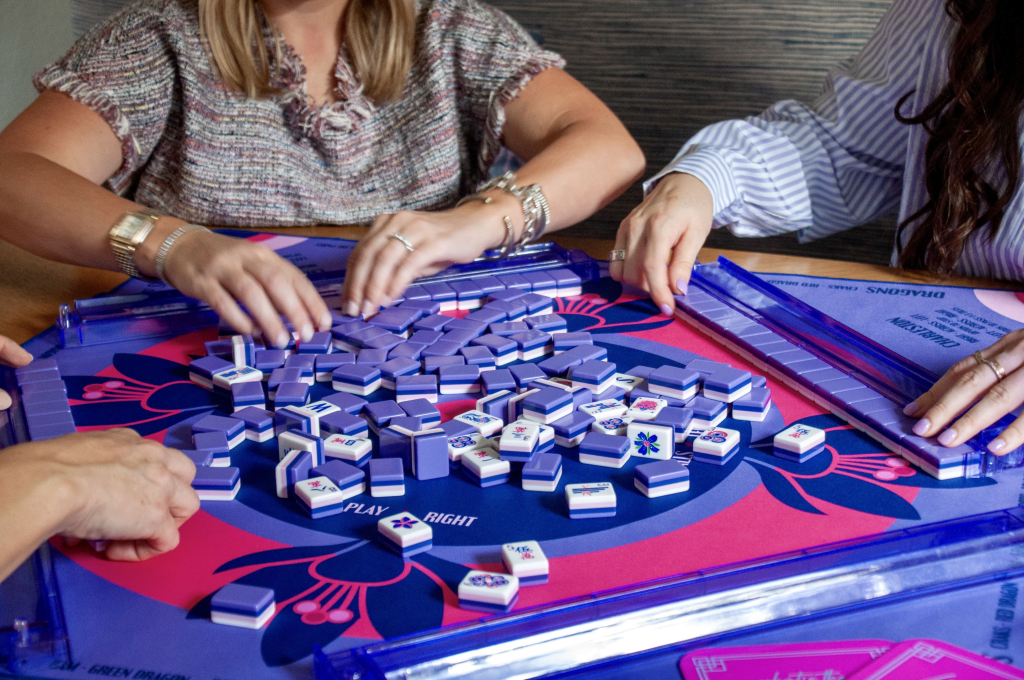
What Is “Messy Mahjong”?
In messy mahjong:
- Tiles are shuffled together in the center of the table
- Walls are not built
- Players simply draw tiles from the middle
It’s a faster, more casual setup that many groups adopt for convenience and social play.
What Does “Playing with Walls” Mean?
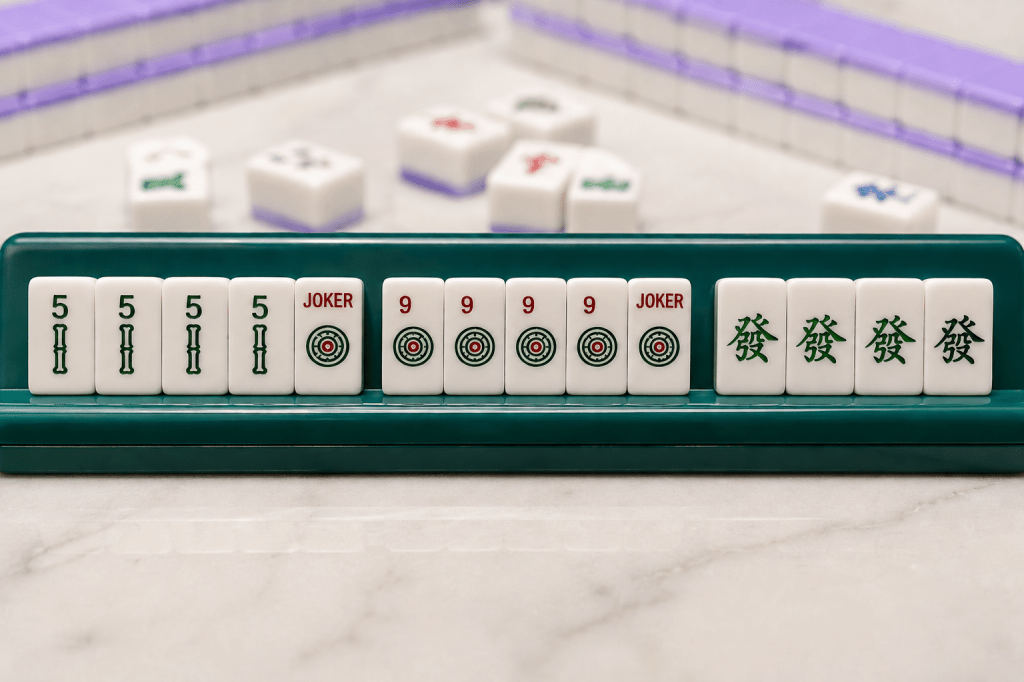
Traditional mahjong setup involves building four walls of stacked tiles before the game begins. Players then draw from the walls throughout the game.
Playing with walls:
- Follows traditional mahjong structure
- Creates more formality at the table
- Adds ritual and rhythm to the game
For many players, building the walls is part of the mahjong experience itself.
The Benefits of Messy Mahjong
Faster Setup
The biggest advantage of messy mahjong is speed.
Without walls to build:
- Games start faster
- Transitions between hands are quicker
- Casual groups can play more hands in less time
For social games or beginner lessons, this can make the experience feel more relaxed.
Less Intimidating for Beginners
New players already have a lot to learn:
- The card
- The Charleston
- Jokers
- The flow of the game
Removing walls simplifies the setup and helps beginners focus on gameplay rather than mechanics.
More Casual and Social
Messy mahjong often feels:
- More conversational
- Less formal
- Easiergoing overall
For some groups, especially newer or younger players, this atmosphere makes the game more approachable.
Easier in Smaller Spaces
Not every table comfortably accommodates large walls and racks. Messy mahjong can work better:
- In smaller apartments
- At casual gatherings
- While traveling
The Benefits of Playing with Walls
Honors Tradition
Building walls is part of mahjong’s history and ritual. Many players love the structure and rhythm it creates before the game begins.
For traditionalists, walls make the game feel complete.
Creates Better Tile Organization
Walls:
- Keep tiles orderly
- Make drawing smoother
- Reduce accidental exposure of tiles
The game can feel more controlled and visually cleaner.
Adds Ceremony and Anticipation
There’s something satisfying about:
- Building the walls
- Breaking the wall
- Watching the game unfold traditionally
For many players, this ritual adds to the charm of mahjong.
Preferred in Competitive or Experienced Play
More experienced groups often prefer walls because they:
- Maintain consistency
- Mirror tournament-style play
- Preserve traditional pacing and etiquette
So Which Is Better?
Honestly? Neither.
The best style is the one that:
- Fits your group
- Keeps the game enjoyable
- Makes players comfortable at the table
Some groups always use walls. Others never do. Many switch depending on:
- Space
- Time
- Skill level
- Mood
And that flexibility is part of what makes American mahjong so social and adaptable.
Mahjong Is About the Experience
At the end of the day, most players care less about how the tiles are arranged and more about:
- Spending time together
- Challenging themselves
- Sharing laughs around the table
Whether your tiles are neatly stacked in walls or happily scattered in the center, the goal remains the same:
Good company.
Good tiles.
And just one more game.
Or maybe…
just one more tile.




Leave a Reply