If you’ve ever heard someone say, “That’s not how we play,” while talking about mahjong, they were probably right—depending on where they learned.
While American and Chinese mahjong share a common origin, they are now distinctly different games. Understanding those differences not only clears up confusion but also helps new players feel more confident at the table.
Let’s break it down.
One Game, Many Traditions
Mahjong originated in China, where it evolved regionally over centuries. When the game arrived in the United States in the early 20th century, it adapted to American preferences—eventually becoming what we now recognize as American mahjong.
Think of it less as “right vs. wrong” and more as different dialects of the same language.
The Biggest Difference: The Card
American Mahjong
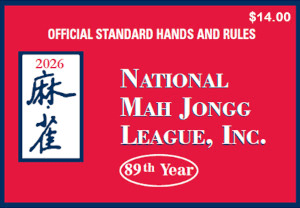
American mahjong revolves around the National Mah Jongg League (NMJL) card, which is updated annually. The card:
- Lists all valid hands
- Changes every year
- Requires memorization and pattern recognition
- Creates a shared standard across the U.S.
Players choose a hand from the card and work toward it throughout the game.
Chinese Mahjong
Chinese mahjong does not use a card. Instead:
- Players form hands organically
- Scoring is based on combinations and bonuses
- Strategy evolves hand by hand
- Rules vary by region (Cantonese, Shanghai, Hong Kong styles, etc.)
This makes Chinese mahjong more fluid—and American mahjong more structured.
Jokers vs. No Jokers
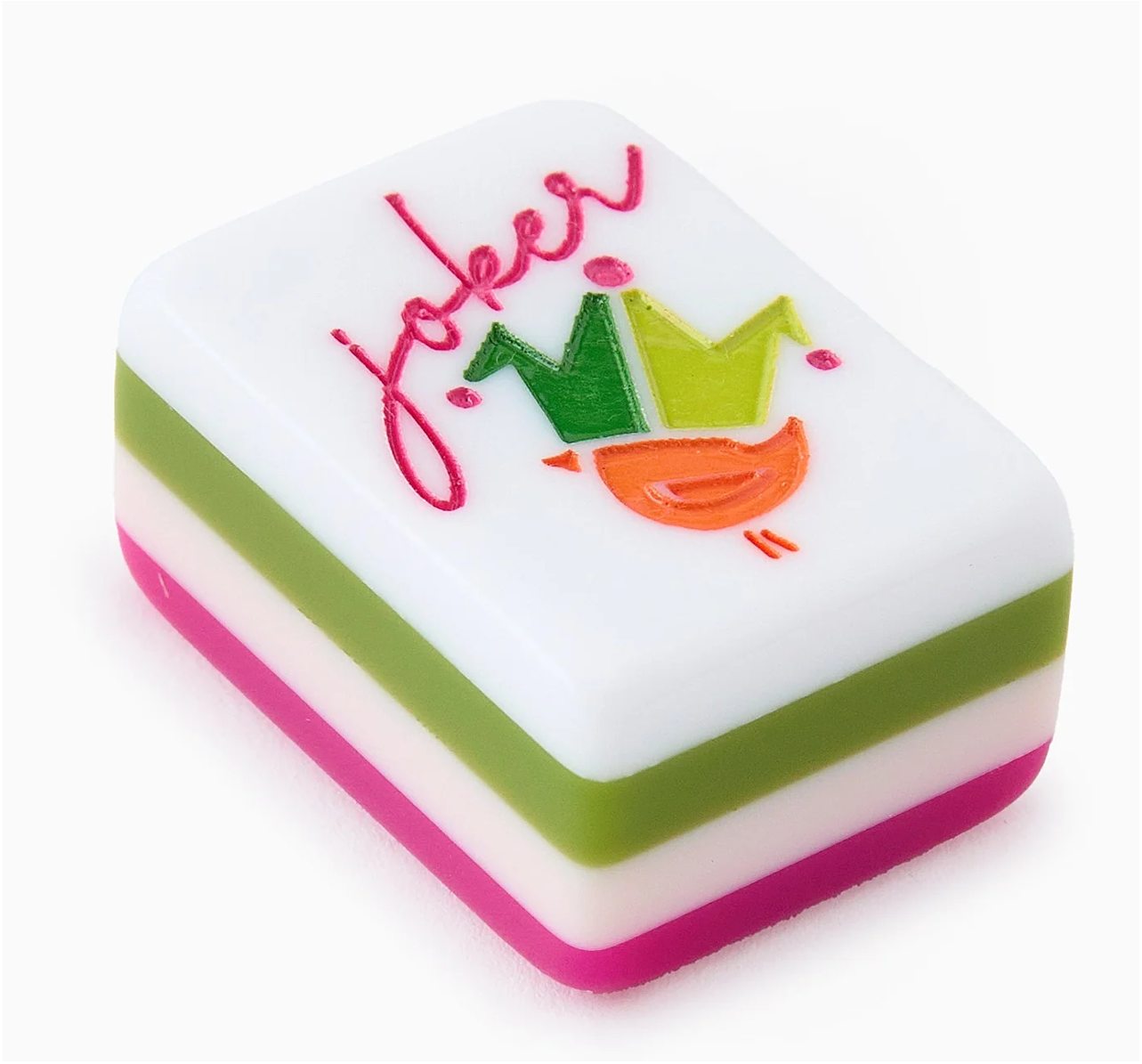
One of the most recognizable features of American mahjong is the joker tile.
American Mahjong
- Jokers can substitute for most tiles
- They cannot be used in singles or pairs
- They add flexibility and strategy
- Joker exchanges add excitement to the game
Chinese Mahjong
- No jokers
- All tiles must be earned naturally
- Strategy focuses more on probability and timing
Jokers are a purely American innovation—and one that many players love.
The Charleston
The Charleston is another uniquely American element.
American Mahjong
- A pre-game tile exchange
- Encourages interaction and planning
- Adds a social and strategic layer before play begins
Chinese Mahjong
- No tile passing phase
- Players begin play immediately after the deal
For many American players, the Charleston is a favorite ritual—equal parts strategy and anticipation.
Structure vs. Flexibility
American Mahjong
- Fixed hand patterns
- Annual rule updates
- Strong emphasis on following standardized rules
- Less improvisation mid-game
Chinese Mahjong
- Greater flexibility
- Scoring complexity
- Adaptable strategies throughout play
- Regional variations in rules and scoring
American mahjong rewards planning and memory; Chinese mahjong rewards calculation and adaptability.
Pace and Social Style
American Mahjong
- Typically slower and more deliberate
- Highly social
- Emphasizes etiquette and table norms
- Often played weekly with the same group
Chinese Mahjong
- Often faster-paced
- Competitive energy
- Played in family or community settings
- Scoring can be more intense
Neither is better—they simply reflect different cultural approaches to play.
Which Version Should You Learn?
If you’re playing in the United States, especially in clubs or lessons, American mahjong is usually the best place to start. Its structure and shared standards make it easier to learn and play socially.
If you’re interested in:
- Travel
- Cultural history
- Competitive play
…then learning Chinese mahjong can be a fascinating next step.
Many seasoned players enjoy both.
Same Tiles, Different Games
At the end of the day, American and Chinese mahjong share the same foundation—but they’ve grown into different expressions of the game.
Understanding those differences helps us appreciate the richness of mahjong as a whole—and reminds us that there’s more than one way to love the tiles.
And no matter which version you play, the feeling is often the same:
Just one more tile.



 Where Friends, Tiles & Traditions Meet
Leave a comment